
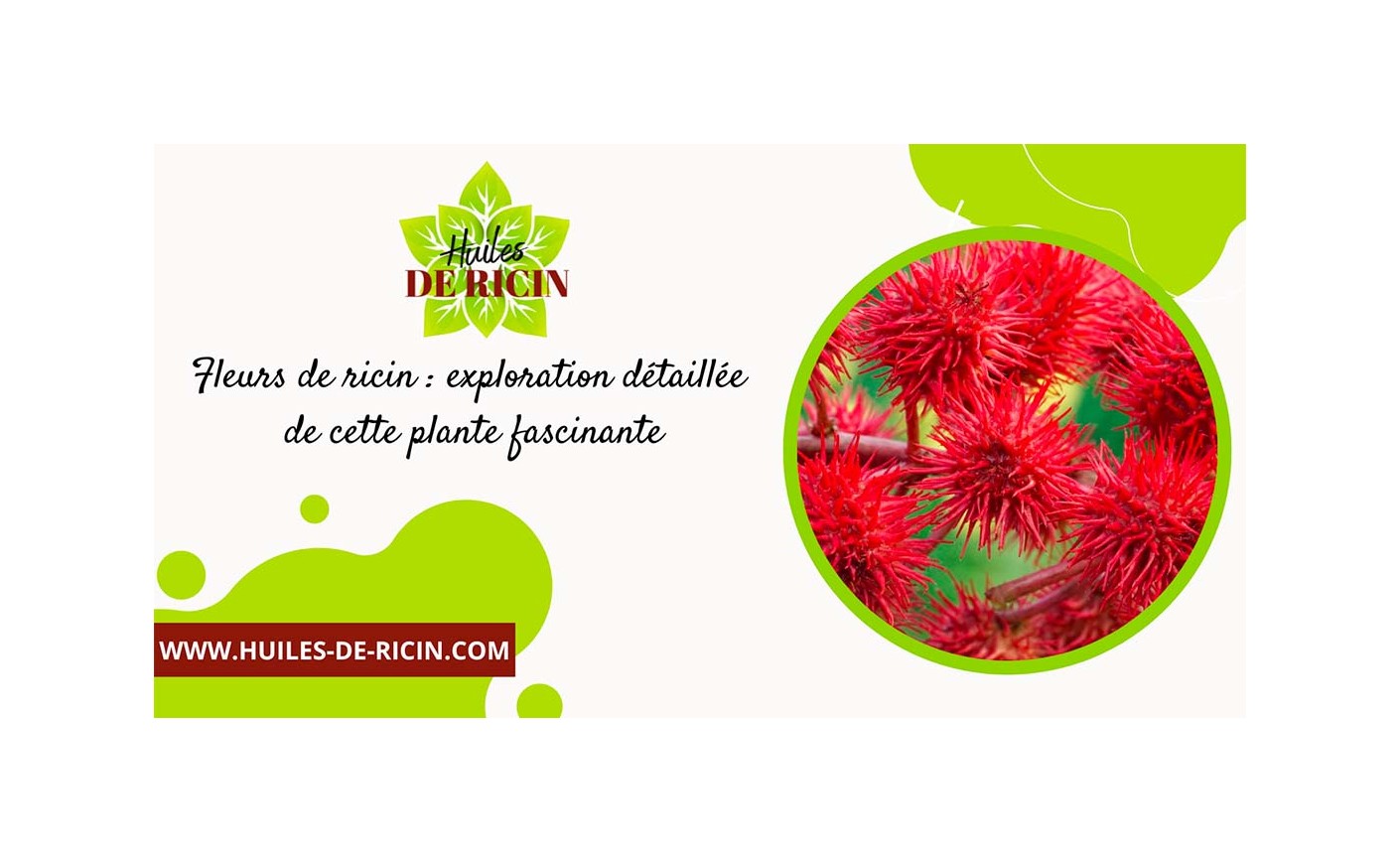
Castor flowers: a detailed exploration of this fascinating plant
Castor flowers, belonging to the Euphorbiaceae family, are particularly interesting for their beauty and unique properties. The castor plant, known scientifically as Ricinus communis, has many qualities that make it valuable in the fields of horticulture and pharmacy. Here's an in-depth exploration of this fascinating botanical species.
Origin and main characteristics of the castor bean
Originating in tropical Africa, the castor bean has since been widely cultivated in warm regions throughout the world. This plant can reach up to 4 metres in height and is distinguished by its luxuriant foliage and green or reddish palmate leaves. The flowers, although less spectacular than the foliage, deserve special attention for their unique structure.
Flower spikes: a remarkable structure
Castor flowers appear in spikes, densely grouped at the top of the stems. Each spike contains both male and female flowers, facilitating pollination. Male flowers have numerous stamens, while female flowers have prominent styles. This makes for an efficient pollination process, crucial to the production of castor oil seeds.
Capsules and seeds: castor's hidden treasures
After flowering, the castor plant develops spiny capsules containing three compartments, each housing a single seed. These castor seeds are rich in oil, which explains their high commercial value. They are used to producecastor oil, renowned for its many medical and industrial applications.
The castor oil life cycle
Understanding the castor oil plant's life cycle helps us to better appreciate the crucial stages in its growth and reproduction. From germination to maturity, each phase has its own special features.
Germination and growth
Castor seeds need a warm temperature to germinate effectively. Once planted, they can start to germinate in just a few days if conditions are right. Initial growth is rapid, with strong roots forming and vigorous growth towards the light.
Maturation and flowering
As the castor reaches maturity, it begins to produce its first flowers. Depending on growing conditions, this can happen within six to twelve months of planting. Once the first flower spikes have appeared, the reproductive cycle continues with pollination and the production of seed capsules.
Uses and benefits of castor flowers
Castor florets and the plant itself are used in a variety of ways, both in ornamental horticulture and to produce by-products such as castor oil.
Horticulture: the castor is popular with gardeners for its decorative foliage. Its large leaves and imposing stature add an exotic touch to gardens and green spaces.
Pharmacopoeia: the oil extracted from castor seeds has well-known laxative properties. It is also used in dermatology to treat various skin problems, thanks to its anti-inflammatory and moisturising properties.
Industrial applications: in addition to its medicinal uses, castor oil is also used as an industrial lubricant. Its viscosity and stable chemical properties make it ideal for a variety of technical applications.
Growing castor oil: practical advice
Growing castor oil requires specific knowledge and techniques to ensure optimum growth and successful flowering.
Soil selection and preparation
Castor thrives in well-drained soil rich in organic matter. It is advisable to prepare the soil by adding compost or decomposed manure to provide the plant with the nutrients it needs.
Sowing and care
Castor seeds are best sown directly in the ground after the last spring frosts. Water regularly, especially during dry spells, to ensure healthy growth. Fertilise every month with a balanced fertiliser to support flowering and seed development.
Precautions and toxicity
Although castor has many advantages, it also entails risks, not least the toxicity of its seeds.
Seed toxicity
Castor seeds contain a toxic substance called ricin. This is a powerful toxin that can cause serious symptoms if ingested. It is therefore vital to handle these seeds with care and keep them out of the reach of children and pets.
Safety precautions
When growing castor beans, it is advisable to wear protective gloves when handling the plants and seeds to avoid any potential contact with ricin. In addition, informing all family members of the dangers associated with this plant can prevent untoward incidents.
Popular varieties of castor oil
There are various varieties of castor, each with distinct characteristics that make them attractive for different garden and agricultural uses.
Ricinus communis 'Carmencita
This variety is characterised by its flamboyant red leaves and spectacular flowers. Ideal for creating bold visual accents in the garden.
Ricinus communis 'Impala'
Known for its bronze foliage and vibrant pink flowers, this variety adds an elegant touch to flowerbeds and landscapes.
Ricinus communis 'Zanzibarensis
Distinguished by its impressive size, this variety can reach up to 5 metres in height, providing a dramatic, structured effect in large open spaces.
Biodiversity and ecology
Castor also plays an important ecological role, supporting biodiversity and providing natural habitats for a range of insect and bird species.
Habitats and ecological interactions
In its natural habitat, castor provides a refuge and food source for many pollinating insects, particularly bees and butterflies. Birds also feed on the insects present on castor plants, helping to maintain the ecological balance.
Contribution to biological control
Because of its natural repellent properties against certain pests, castor is sometimes used in organic farming to protect other crops naturally.
Harvesting and storing castor oil seeds
Once the pods have ripened, harvesting castor beans requires a few precautions to avoid ricin contamination.
Harvesting process
When the capsules begin to turn brown, they can be gently cut and left to dry in a well-ventilated area. Once completely dry, the capsules should be carefully opened to extract the seeds.
Safe storage
Collected seeds should be stored in airtight containers, out of the reach of children and animals. Containers should be clearly labelled to prevent accidental use.
All comments